An Introduction To Ancient Iranian Religion Pdf
Achaemenid inscriptions summary: ebook pdf introduction to ancient iranian religion. An introduction to ancient iranian religion: readings from.
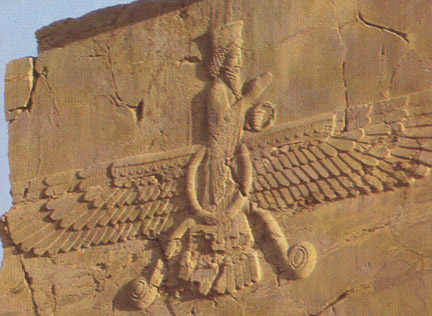
An Introduction to Ancient Iranian Religion was first published in 1983. Minnesota Archive Editions uses digital technology to make long-unavailable books once again accessible, and are published unaltered from the original University of Minnesota Press editions. When Persia fell to Islam in the mid-seventh century, the ancient Iranian religion of Zoroastrianism all but disappeared (although it is still practiced by small groups in India and Iran). As one of the dominant religions of antiquity, it influenced the Judeo- Christian tradition as well as some forms of gnosticism. Despite its age and venerable place in the history of world religions, Zoroastrianism remains little known outside of a few philologists and historians of religion. Because of the difficulty of translation, there is little primary textual material available for nonspecialists; the few translations that do exist are quite old.In An Introduction to Ancient Iranian Religion, William Malandra provides not only modern English translations of the sacred texts but also a comprehensive introduction to the subject of Zoroastrianism itself.

In an introductory essay Malandra outlines the main features of Zoroastrianism in its historical, cultural, and spiritual setting. His new translations of readings from the Avesta, the sacred book of Zoroastrianism, and selections from the Achaemenid inscriptions of the great kings Darius and Xerxes are accompanied by interpretive notes that allow students to make their way through this difficult material. This book is, therefore, not just a collection of texts but a selfcontained introduction to Zoroastrianism that can be used by the nonspecialist without recourse to additional interpretive works.
In lieu of an abstract, here is a brief excerpt of the content: 1. Zarathushtra The Cow's Lament (Yasna 29) Probably the best known and in many ways the most interesting of the Gathas is the so-called 'Cow's Lament,' (Yasna 29). In the form of dramatic dialogue it expresses the suffering of the Cow at the hands of the forces of the Lie. She cries out to Ahura Mazda and the other Ahuras (i.e., the Amssha Spontas) for an explanation of her wretched condition. In particular, she despairs over her abandonment, her lack of an adequate herdsman for her protection. After some discussion born of indecision, since the Ahuras seem unable to find her a proper protector, Zarathushtra is recognized as the only one fit for the job.
The choice of Zarathushtra is less than pleasing to the Cow, who regards him as a weakling. She must make do with Zarathushtra, however, and the Gatha ends with an inconclusive prayer for the granting of power to Zarathushtra. The Gatha is difficult to understand in detail for a variety of reasons. One of the most obvious problems is that the dialogue is so complex that one cannot be sure in many cases who is speaking or, for that matter, who is being spoken to. One must assume that the narrator, who introduces the discourse in sts.
1, 2, 6, and 9, is Zarathushtra himself. It is also clear that in these stanzas the Cow, the Fashioner of the Cow, and Ahura Mazda speak. In regard to the remaining stanzas, matters are not as straightforward. 3 is so obscure that almost nothing certain can be said about it, though one might assume that the speaker is Truth (Asha), who is questioned in st. 4 could well be a continuation of st. 3, but it makes more sense to see it and st.
5 as issuingfrom Zarathushtra, who takes up the narration again in st. To the latter is appended a question probably directed to Ahura Mazda.
Download FREE Illustrator Templates for Brochures at 4OVER4.COM! Brochure templates illustrator. Free Adobe Illustrator templates include layouts, photos & artwork. View 1000's of design examples - brochures, flyers, newsletters, postcards, menus, business cards.
8 is persumably spoken by Good Mind (Wohu Manah). The final two stanzas are again spoken by Zarathushtra. With the help of this outline, one can see that the Gatha takes place in the context of the two supplicants, the Cow and Zarathushtra, on the one hand, and the divine Ahuras, on the other; and, further, 35 36 I Zarathushtra that there is dialogue not only between these two levels of being but also among the Ahuras themselves. The identity of the Fashioner of the Cow (Gsush tashan) is not completely certain. Historically he probably derives from the Indo-Iranian figure of the Artisan, known in the earlier parts of the Rgveda as Tvastr and in the Avesta as Thvorsshtar (see st.
6), while within Zarathushtra's theological system he has been transformed into Spsnta Mainyu, the creative aspect of Ahura Mazda, withoutever completelylosinghisindependence. The fact that Zarathushtra almost always (except in Y. 51.7) preserves the traditional nomenclaturefor this figure, instead of subsuming him completely under the Amasha Spsnta, gives the immediate impression that the 'Cow's Lament' is based somehow on inherited tradition, that it is not simply Zarathushtra's creation. That this is the case has been shown by several scholars, most comprehensively, however, by B.
Lincoln.10 According to Lincoln, the Indo-Iranians were the unique possessors of a myth of the 'Bovine's Lament,' which, existing as an elaboration of the more widespread Indo-European myth of the cattle raid, dramatized the conflict between warriors and priests over rightful possession of cattle. In the myth (obviously a priestly creation) the Cow complains to the deities about her mistreatment at the hands of warriorraiding parties. The deities take counsel and subsequently decide to entrust the Cow to a priest, who becomes the legitimate owner of cows and so oftheir products, essential in the ritual service of the gods. I find myselfin agreement with Lincoln as to the origin of the 'Bovine's Lament' in the context of the Aryan pastime, cattle raiding; yet I cannot accept the remainder of the reconstruction as involving a class struggle. In the case of the Indian evidence dealing with Vasistha (the priest) and Visvamitra (the warrior), the theme of caste conflict is obvious; yet, appearing as it does in the Rdmdyana epic, could the myth not equally well be an IndoAryan reinterpretation along caste lines? When one turns to the Iranian evidence (includingYt. 84-86; see sect.
River Flowing From Belgium
3), one finds that cattle raiders are indeed active, yet. If you would like to authenticate using a different subscribed institution that supports Shibboleth authentication or have your own login and password to Project MUSE, click 'Authenticate'. You are not currently authenticated.
An Introduction To Ancient Mesopotamian Religion
View freely available titles: OR.